Leon Franke · 29 September 2026
Mapping Keyword Velocity Patterns Across Multiple Search Engines with Event-Driven Tracking in Analytics Suites
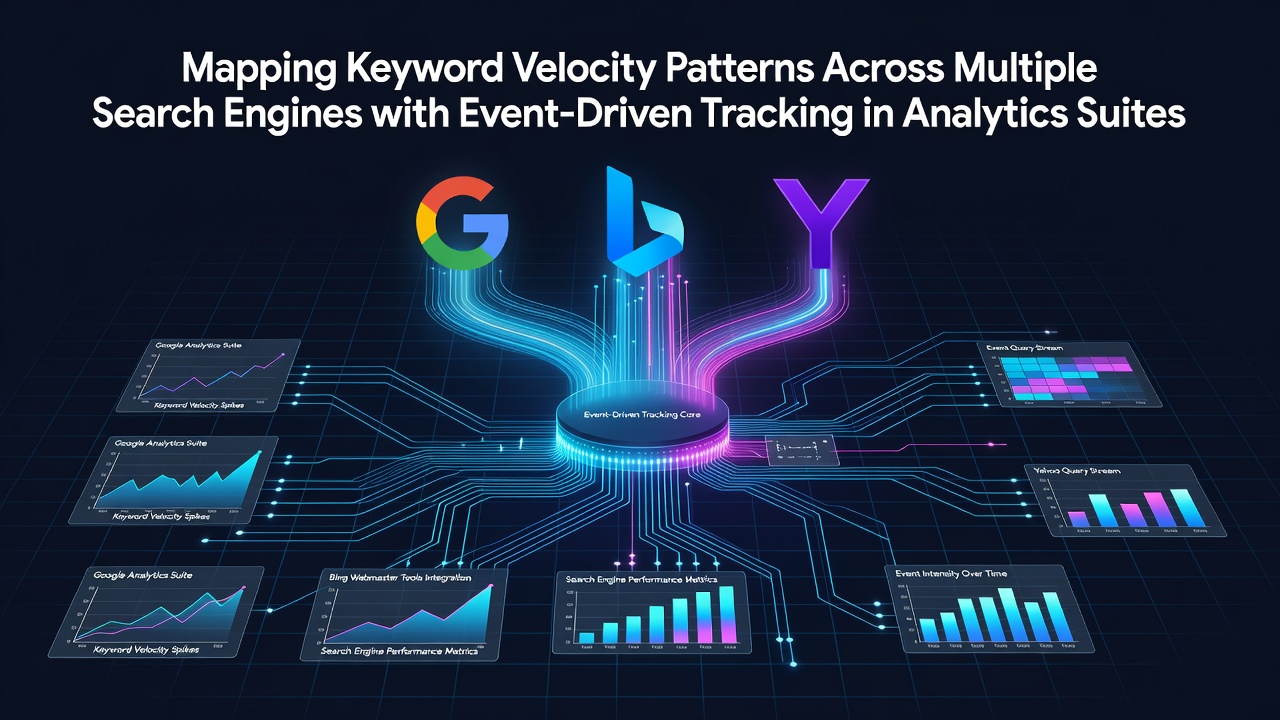
Keyword velocity refers to the rate at which search terms gain or lose visibility in results pages, and mapping these patterns requires coordinated data collection across platforms such as Google, Bing, and emerging regional engines. Observers note that event-driven tracking in analytics suites captures discrete user actions and ranking shifts as they occur, which allows analysts to align velocity signals with specific triggers like algorithm updates or content changes rather than relying solely on periodic crawls.
Core Components of Keyword Velocity Measurement
Analysts begin by defining velocity as a derivative metric that combines position changes, impression growth, and click-through rates over short time windows, and they feed these calculations into event streams that fire whenever a tracked keyword crosses a threshold. Research indicates that combining data from multiple engines reduces blind spots because each platform applies distinct ranking factors and update cadences, while event-driven architectures ensure that sudden spikes appear in real time instead of waiting for daily batch jobs. Those who study search behavior find that velocity patterns often cluster around external events such as product launches or news cycles, and connecting these clusters to precise timestamps helps isolate cause and effect across engines.
Implementing Event-Driven Tracking in Analytics Platforms
Modern suites expose APIs that let teams subscribe to ranking and impression events, then route those payloads into centralized data lakes where velocity calculations run continuously. Data shows that teams using this approach detect ranking reversals within minutes of an engine rollout, whereas traditional daily exports can lag by twenty-four hours or more. In September 2026 several major suites added native support for multi-engine event schemas, which standardized fields for position, SERP features, and device type and made cross-platform comparisons more direct. Experts observe that the resulting datasets reveal engine-specific velocity signatures, for instance Bing often shows slower ramp-up curves on commercial keywords compared with Google while regional engines can accelerate or dampen trends depending on local indexing priorities.
Cross-Engine Pattern Analysis Techniques
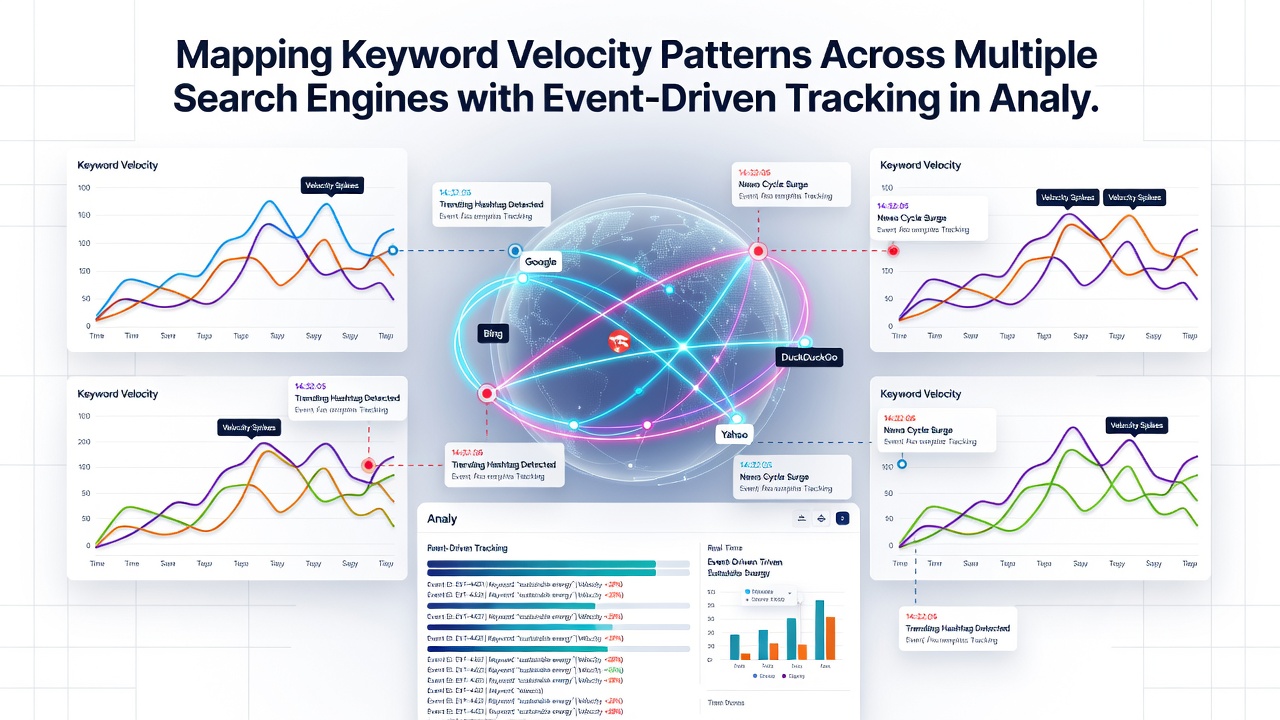
Once events arrive, analysts apply time-series decomposition to separate baseline velocity from event-driven spikes, and they overlay these series across engines to identify convergent or divergent movements. One study revealed that keywords exhibiting simultaneous acceleration on at least two major engines tend to sustain gains longer than those rising on a single platform, and this observation has prompted teams to build alerting rules that trigger when multi-engine agreement exceeds a configurable threshold. Figures from industry reports further illustrate how device and location filters refine velocity maps, because mobile results frequently diverge from desktop patterns within the same engine. Researchers discovered that incorporating location-specific events sharpens the picture of regional velocity, allowing campaigns to allocate resources toward markets where momentum builds earliest.
Practical Integration with Existing Analytics Workflows
Teams integrate velocity mapping by tagging key pages with event listeners that record ranking checks alongside on-page behavior, then they join these logs with third-party ranking APIs inside the analytics suite. This produces unified timelines where a position shift appears alongside corresponding changes in session duration or conversion events, and the combined view helps attribute velocity to content updates rather than external noise. According to documentation from the Australian Competition and Consumer Commission on digital platform transparency, standardized event schemas improve auditability when multiple data sources feed the same dashboard. Observers note that organizations adopting these methods also reduce duplicate tracking code, because a single event pipeline serves both internal velocity analysis and external reporting requirements.
Challenges in Maintaining Data Consistency
Engine APIs impose rate limits and varying data freshness windows, which can introduce gaps when velocity calculations span several platforms at once. Analysts address this by applying interpolation techniques that respect the native update cadence of each engine, and they validate interpolated segments against known ground-truth events such as confirmed algorithm rollouts. Evidence suggests that maintaining separate velocity baselines per engine before aggregation prevents one platform's slower refresh rate from masking signals on faster-updating competitors. Those managing large keyword sets further segment tracking into priority tiers, ensuring that high-value terms receive denser event sampling while long-tail terms rely on less frequent checks that still feed the overall velocity model.
Conclusion
Mapping keyword velocity across engines through event-driven tracking supplies analysts with timely, granular signals that batch processing cannot match, and the approach continues to evolve as suites add native multi-engine support and standardized schemas. Organizations that align their tracking architecture with these capabilities gain earlier visibility into ranking momentum and can coordinate responses across platforms more effectively. Continued refinement of event taxonomies and cross-engine validation methods will determine how precisely velocity patterns can be isolated and acted upon in future reporting cycles.